Sound familiar?Thorold
- The call
- The door reaches the floor, then reverses before staying closed. The threshold is clear, but a sensing edge is distorted and one photoelectric sensor has moved out of line with its partner.
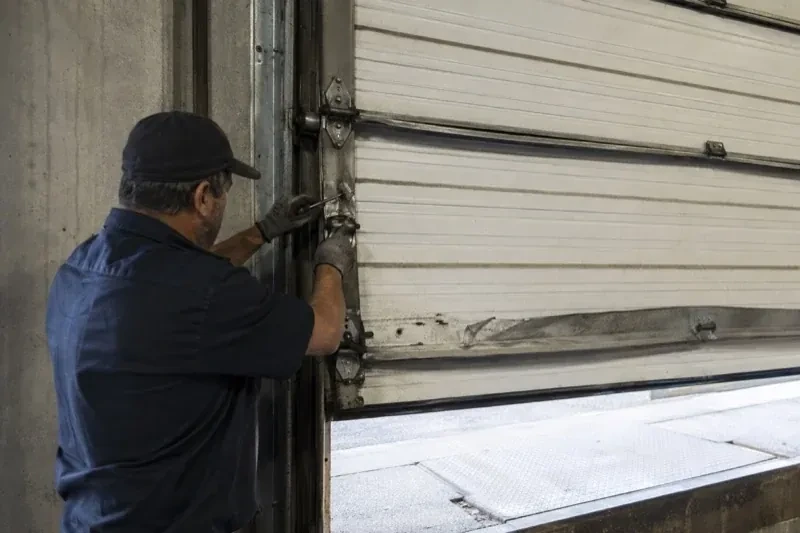
A powered door works properly only when its mechanical assembly and operator agree. Repair may involve restoring smooth manual movement first, then checking the drive connection, limits, brake or clutch, control station and entrapment-protection devices. This order keeps an operator adjustment from masking a heavy, binding or unbalanced door. After the underlying hardware moves freely, travel settings are brought back to the actual open and closed positions, sensors are aligned, and the system is tested from each normal control point.
Sound familiar?Thorold
Commercial Sectional Door Repair · Thorold
Scene 1
When the motor hums, stalls or strains, the door itself is assessed before settings are changed. With the system safely placed for manual evaluation, the technician checks whether the door moves freely and remains controlled through its range. Spring condition, cable wraps, rollers, track obstructions and any active lock are reviewed. Only after the mechanical load is understood does attention move to the drive chain, sprockets, clutch or brake, travel limits and controls. This sequence separates an operator issue from resistance created elsewhere in the assembly.
Scene 2
Worn running hardware is replaced in its correct sequence rather than mixed between positions. Numbered end hinges maintain the changing roller offset that guides stacked sections around the track curve, while centre hinges keep adjoining panels connected across the width. Roller stem length, diameter and bearing type are matched to the track and door duty. Each mounting area is checked for enlarged holes or cracked stile material before new fasteners are installed. With side play reduced and alignment restored, the sections articulate smoothly instead of knocking or twisting through the bend.
Scene 3
New rollers, hinges or bearings reduce play at the points that previously knocked or vibrated. Ongoing care means using the lubricant and interval stated for the installed door, applying it to moving pivots and bearings rather than coating the track. Tracks stay clean so rollers can travel on a firm surface without collecting grit. A simple note in the facility log describing the former sound and repaired location gives staff a reference. If a distinct noise returns at the same travel point, that observation makes follow-up assessment more focused.
What shapes the quoteThorold Garage Door Repair Co.
FeesSame any hour
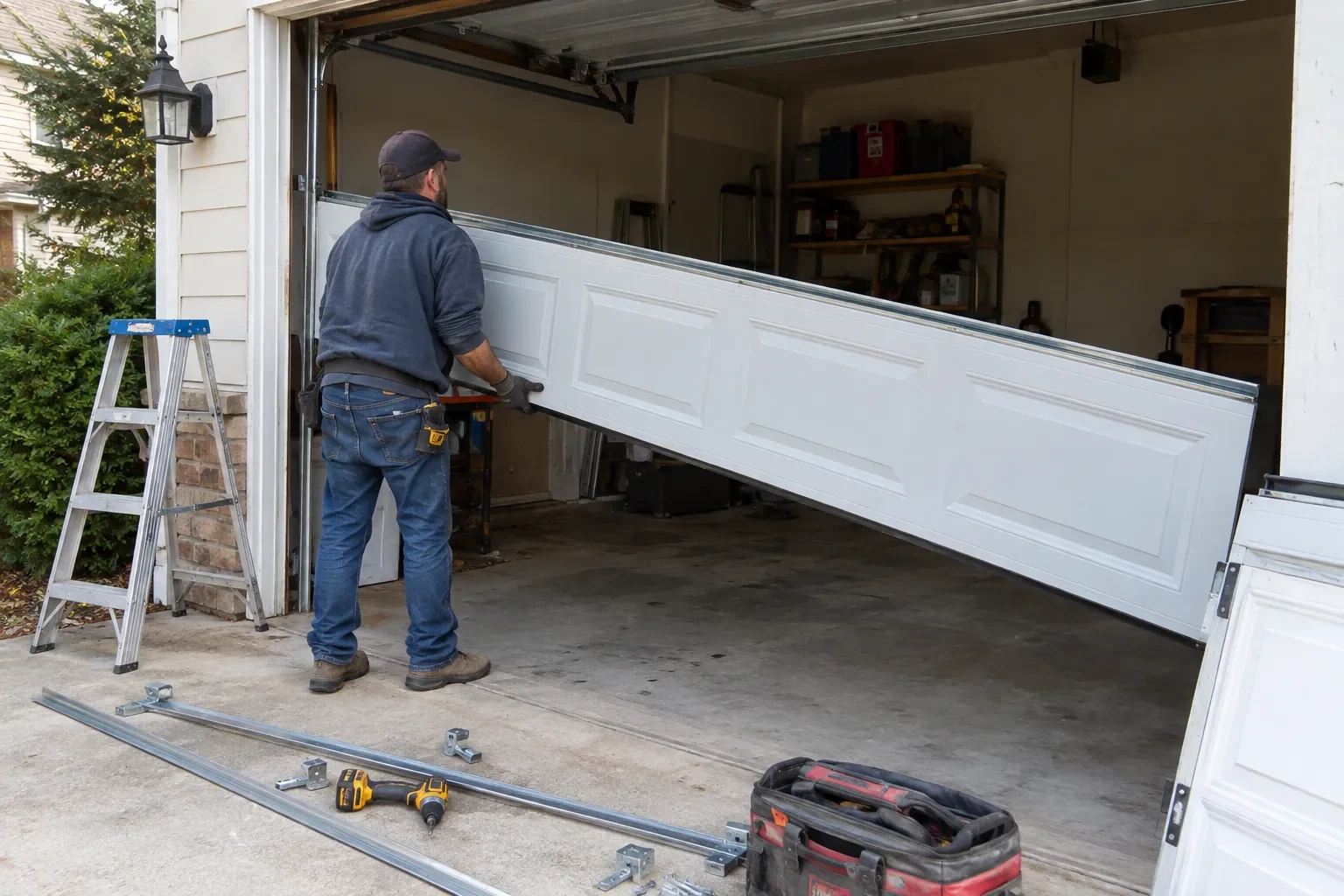
The technician first controls the door's weight and position with suitable supports or clamps. Stored spring energy is then managed with proper winding tools and a defined sequence before connected parts are loosened. Cables, drums and springs are matched to the door and lift geometry, installed with the system secured, and checked for level tension through controlled movement.
The operator is reviewed when panel damage changes door movement, balance or closed position. After the mechanical repair, the drive connection, limits and protective devices can be checked against the restored travel. This is especially useful after impact, because a bent section may have made the operator stop early or apply force against resistance before the damaged panel was replaced.
A reversal can start with a blocked or misaligned photoelectric sensor, a distorted sensing edge, resistance in the track, an incorrect close limit or a control-circuit issue. Inspection covers the clear opening, sensor alignment and wiring, bottom edge and mechanical travel. The source is corrected first, then the protective response is tested through several complete cycles.
NiagaraOntario
Commercial Sectional Door Repair · Beaver Dams, Thorold Park, Thorold South, Allanburg, Port Robinson
Every square is one home in a hundred.
On-site assessment
A high-lift door begins smoothly, then a cable loses tension as the top sections change direction.
(365) 364-0203, open 24/7.
On-site assessment preferred · (365) 364-0203, open 24/7