Skip to content
ThoroldGarage Door Repair Co.Open 24/7 (365) 364-0203
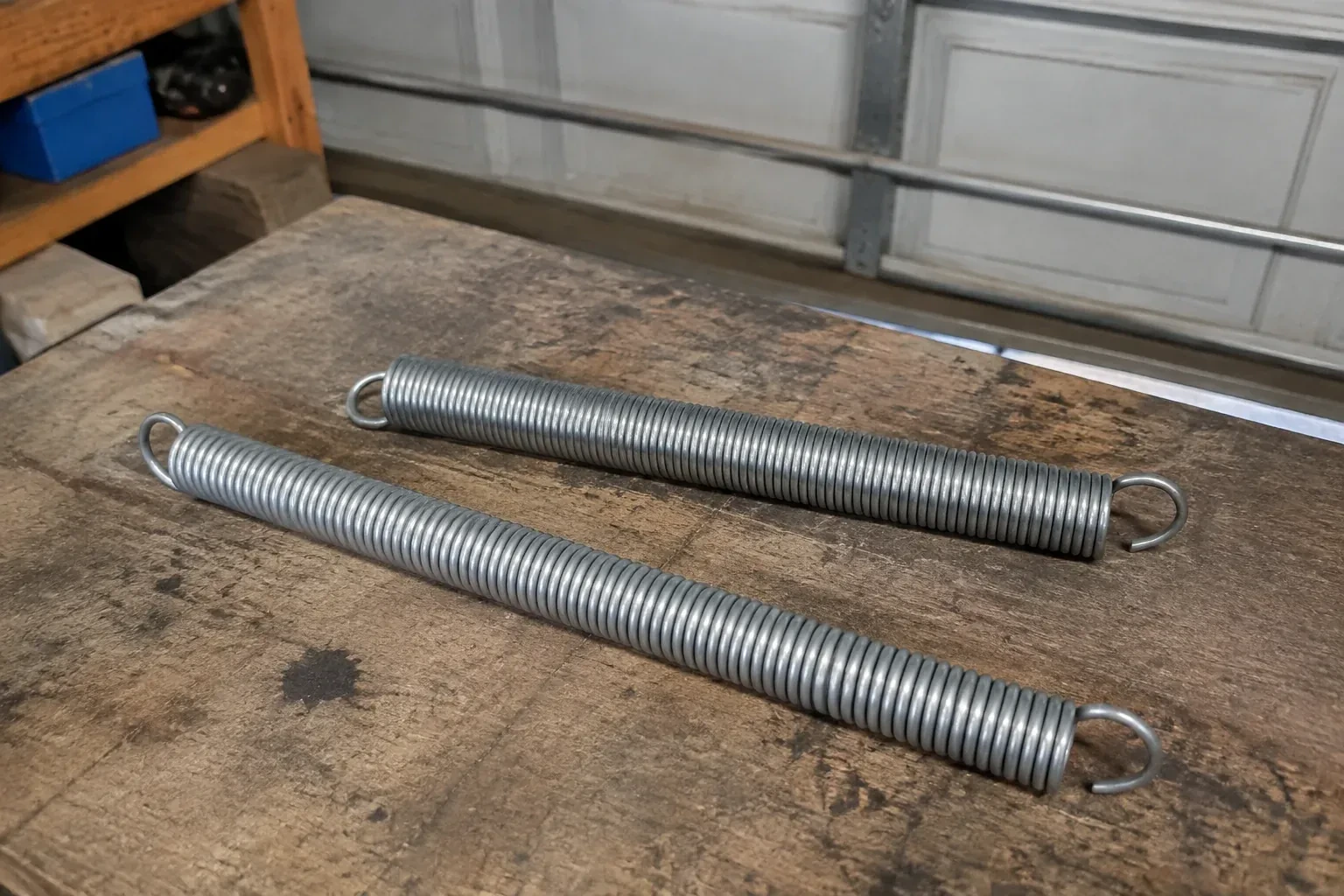
Two detached extension springs with hooked ends on a garage bench. — Extension Spring Replacement, Thorold

Springs · Thorold

Extension Spring Replacement

Open the door by hand and it drifts back down on its own, a little at first and then all at once. Nothing is broken that you can see, but the springs along the tracks look tired, rusty and slightly sagging.

In plain words

Choosing the right spring is a matter of weight, not colour. Extension springs are rated for the weight they are meant to lift, and the correct pair for your door is found by weighing the door itself with the opener released, then checking that figure against the wire size, coil diameter and length of the old springs. Paint colour on the end coil is only a hint; older springs fade, get overpainted or were never quite right to begin with. A pair matched to the measured weight gives a door that holds at half height and lifts with one hand, and an opener that works lightly.

Sound familiar?Thorold

The call
One of the springs beside the track is hanging loose at the front end, its pulley dangling, and a length of cable lies slack along the top of the door. The door sits slightly crooked and the opener reverses whenever it tries to close.
NextHow the visit goes

Extension Spring Replacement · Thorold

How the visit goes

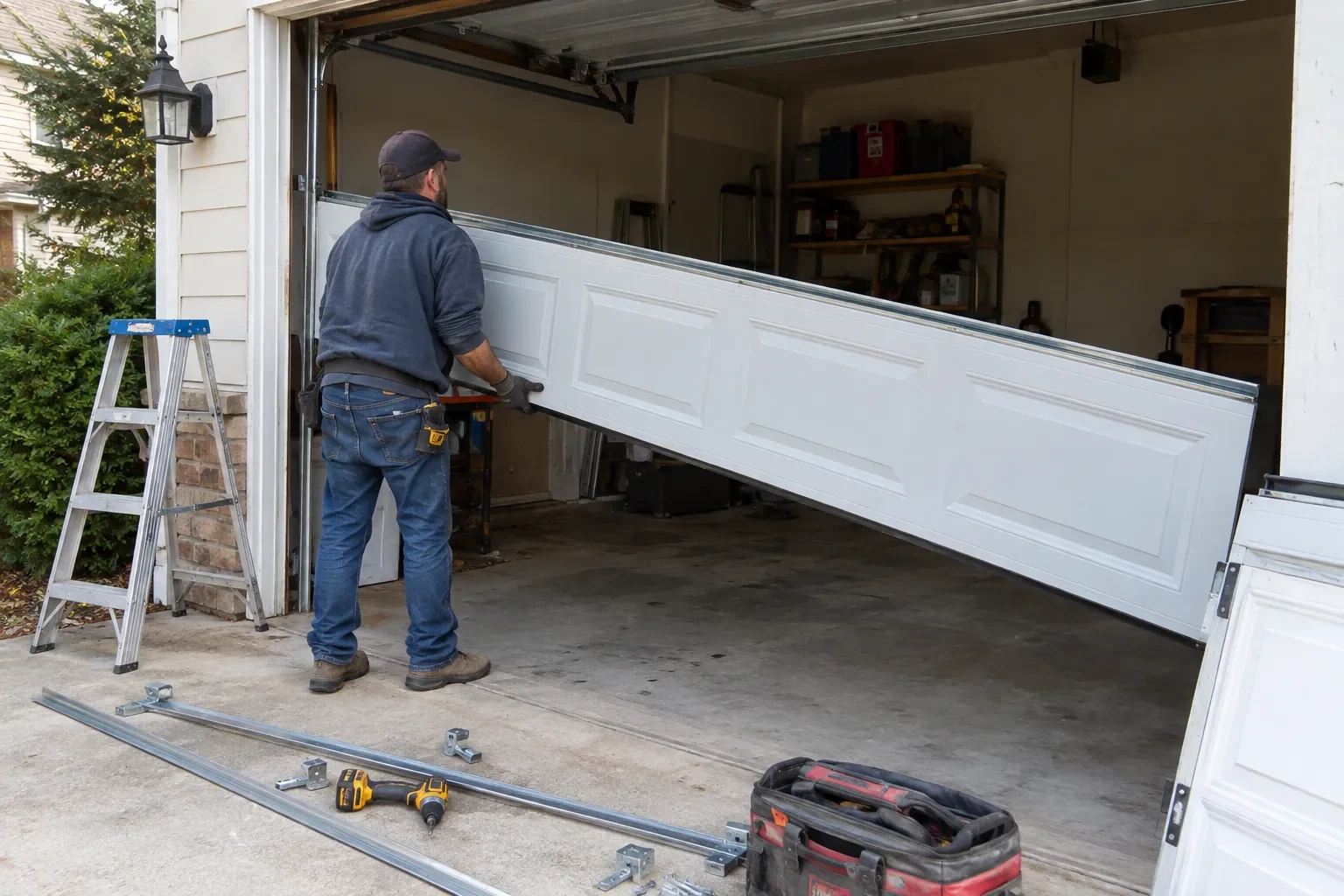
Illustrative garage doors scene — Thorold
  1. Scene 1

    Hangers, brackets and what they are screwed into

    Extension springs pull against whatever holds their back end, usually an angle-iron hanger bolted to the rear track support or lag-screwed into a ceiling joist. The technician checks that this anchor is tight, that the lag screws bite into wood rather than drywall or a split joist, and that the hanger has not bent under years of load. The bracket that carries the fixed pulley at the front of the track is checked the same way, along with the bottom brackets on the door that the lift cables pull on. An anchor that has loosened lets the spring's geometry drift, which is one reason a door slowly becomes uneven.

  2. Scene 2

    Threading the containment cables

    Before a spring is hung, a containment cable is fed through the centre of its coil. One end is anchored at the rear, to the hanger or the framing behind it, and the other is run forward past the pulley and fixed to the bracket at the front of the track or to the wall, with enough slack that the cable never carries load while the spring works. The cable is checked to be clear of the pulley wheel and the lift cable so nothing rubs. Both sides are done the same way, whether or not the old installation had them. A spring that breaks in future is held on the cable rather than crossing the garage.

  3. Scene 3

    A door that lifts as it was designed to

    The difference is felt the first time you pull the release cord and lift the door yourself. It rises with one hand, pauses where you leave it, and comes down at the speed you lower it rather than dropping the last stretch. Under power, the opener runs without the strain in its note that had crept in as the old springs tired, and the door reaches the floor evenly along the seal. Both springs now stretch to the same length as the door closes, both pulleys turn without a squeal, and the cables lie in their grooves. A door in this condition puts little wear on the opener, which is good news for the motor.

In the van

  • Pulleys (sheaves) and forks
  • S-hooks and adjusting clips
  • Extension springs, matched pair
  • Containment (safety) cables
  • Rear spring hangers and angle iron

What shapes the quoteThorold Garage Door Repair Co.

Getting the van to the garage
A detached garage down a shared laneway, a rural property or a building with the bay behind a gate takes more time to reach and set up in, and the quote allows for that.
Containment cables to add
A door that never had containment cables gets them with the new springs, along with anchor hardware into the framing. It is a small parts line and a worthwhile one.
Rollers, hinges and bottom brackets found worn
Cracked roller wheels, split hinges or a bottom bracket rusted at the cable pin are pointed out during the inspection and offered as optional items, since the door is already open and secured.

FeesSame any hour

Have it ready

Before you call · 0 / 3

(365) 364-0203

Frequently asked questions

The door creeps open on its own. Is that a spring problem?

Usually, yes. A door that rises from the floor or from halfway without help has springs pulling harder than the door weighs, which happens when a heavier-rated pair was fitted, when the hooks were set with too much stretch, or when a door has been made lighter by a panel change. It also puts strain on the opener, which has to hold the door down. Weighing the door and fitting the correct rating, set evenly, settles it.

What is the difference between extension springs and torsion springs?

They balance the door in different places. Extension springs are the two long coils that run beside the horizontal tracks and stretch as the door closes; they work through pulleys and cables. A torsion spring is wound on a shaft above the door opening and turns drums that wind the cables. The parts, the way tension is set and the service itself are different, so it helps to say which you have when you call.

Do the pulleys need replacing at the same time?

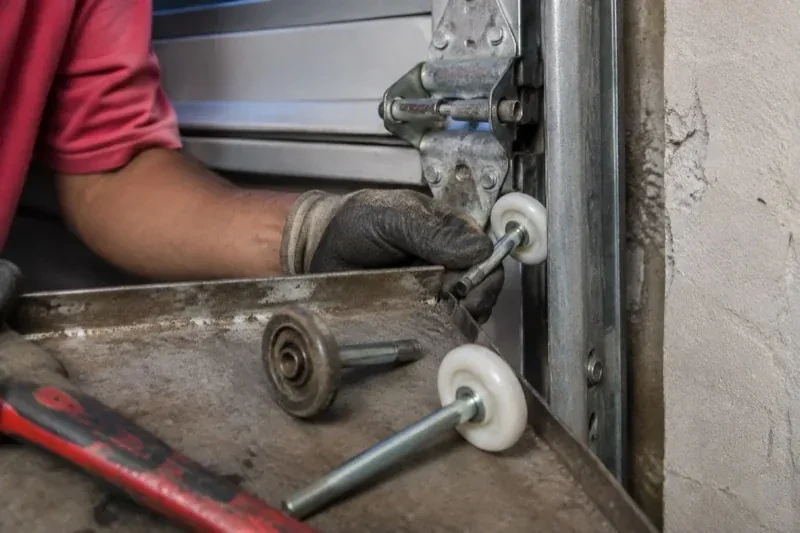
Often, yes. Each side has two pulleys, one on the spring and one fixed at the front of the track, and the cable rides over both on every trip. A pulley whose wheel has worn a sharp groove, or whose bearing has stiffened, drags on the cable and adds load the spring has to overcome, which is a common reason the old spring wore early. Pulleys that spin freely and run true can stay.

Thoroldinformation

NiagaraOntario

Extension Spring Replacement · Beaver Dams, Thorold Park, Thorold South, Allanburg, Port Robinson

Town
Thorold, Niagara
In business
24 years
Hours
Open 24/7
Nights, weekends and holidays, same fees
Visits
On-site assessment preferred. Request a visit or call.

2021 census: what it means at the door

Every square is one home in a hundred.

  • 55 in 100 homes · older homes
  • About 55% of homes in Thorold were built in 1980 or earlier, according to the 2021 Census.Where houses are older, the garage often sits beside the house rather than beneath a bedroom, so noise is a smaller concern and durability a larger one. Heavy-duty rollers, a properly sized torsion spring and cold-rated lubricant make an old door dependable for years.
  • Single-detached houses make up about 69% of homes in Thorold (2021 Census).Households in detached homes often have several remotes, a keypad and a phone app between family members and their cars. We keep all of them programmed to the opener, replace the ones that have failed, and explain how to add a new one when a car changes hands.

Source: Statistics Canada, Census Profile

Open Thorold in Google Maps

On-site assessment

Request a visit.

Open the door by hand and it drifts back down on its own, a little at first and then all at once.

(365) 364-0203, open 24/7.