Sound familiar?Beaver Dams
- The call
- The door reaches the floor, then reverses before staying closed. The threshold is clear, but a sensing edge is distorted and one photoelectric sensor has moved out of line with its partner.
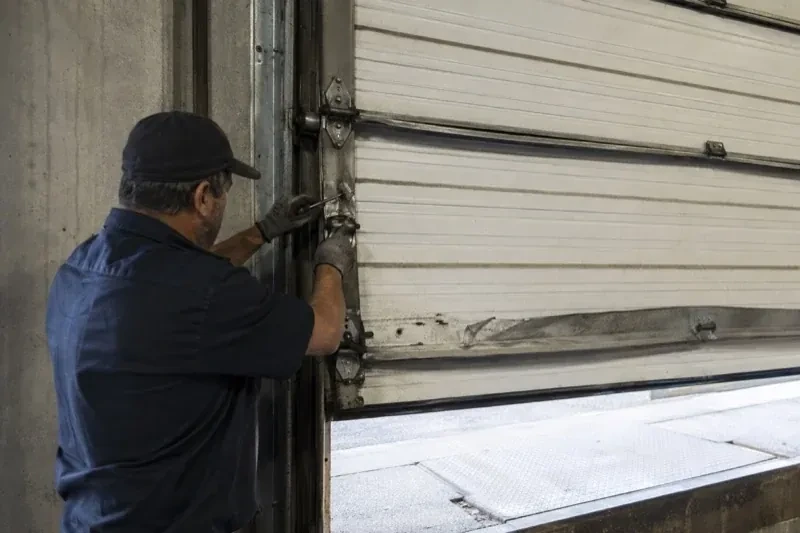
When a bay door hangs crooked, the visible angle is often only the starting clue. A technician compares cable tension on both sides, checks how each cable sits on its drum, examines bottom fixtures and looks for a shifted track or damaged roller. The door is supported before tensioned parts are handled. Once the cause is corrected, the cables are seated, the door is levelled and balance is checked through travel. Powered limits and protective devices are tested afterwards, because the operator depends on a mechanically sound door.
Sound familiar?Beaver Dams
Commercial Sectional Door Repair · Beaver Dams
Scene 1
When the motor hums, stalls or strains, the door itself is assessed before settings are changed. With the system safely placed for manual evaluation, the technician checks whether the door moves freely and remains controlled through its range. Spring condition, cable wraps, rollers, track obstructions and any active lock are reviewed. Only after the mechanical load is understood does attention move to the drive chain, sprockets, clutch or brake, travel limits and controls. This sequence separates an operator issue from resistance created elsewhere in the assembly.
Scene 2
Operator work follows the mechanical repair. The drive chain, sprockets, shaft connection, manual hoist, brake or clutch are inspected and adjusted according to the installed unit's instructions. Open and closed limits are set to the actual door positions without driving sections against stops or compressing seals excessively. Control wiring and stop functions are checked, followed by the photoelectric sensors or sensing edge supplied with the system. Several commanded cycles confirm consistent stopping, reversing and seating from the controls normally used by the facility.
Scene 3
The finished record ties the complaint to the actual repair: door identification, parts changed, settings adjusted and functions tested. For properties with many similar openings, assigning a clear asset number to each door prevents service histories from becoming mixed. Cycle demand, collisions and recurring observations can then be logged against the correct bay. This information supports practical maintenance planning and helps the next technician arrive with relevant dimensions and system details, while staff retain a concise reference for normal sound, travel and control behaviour.
What shapes the quoteThorold Garage Door Repair Co.
FeesSame any hour
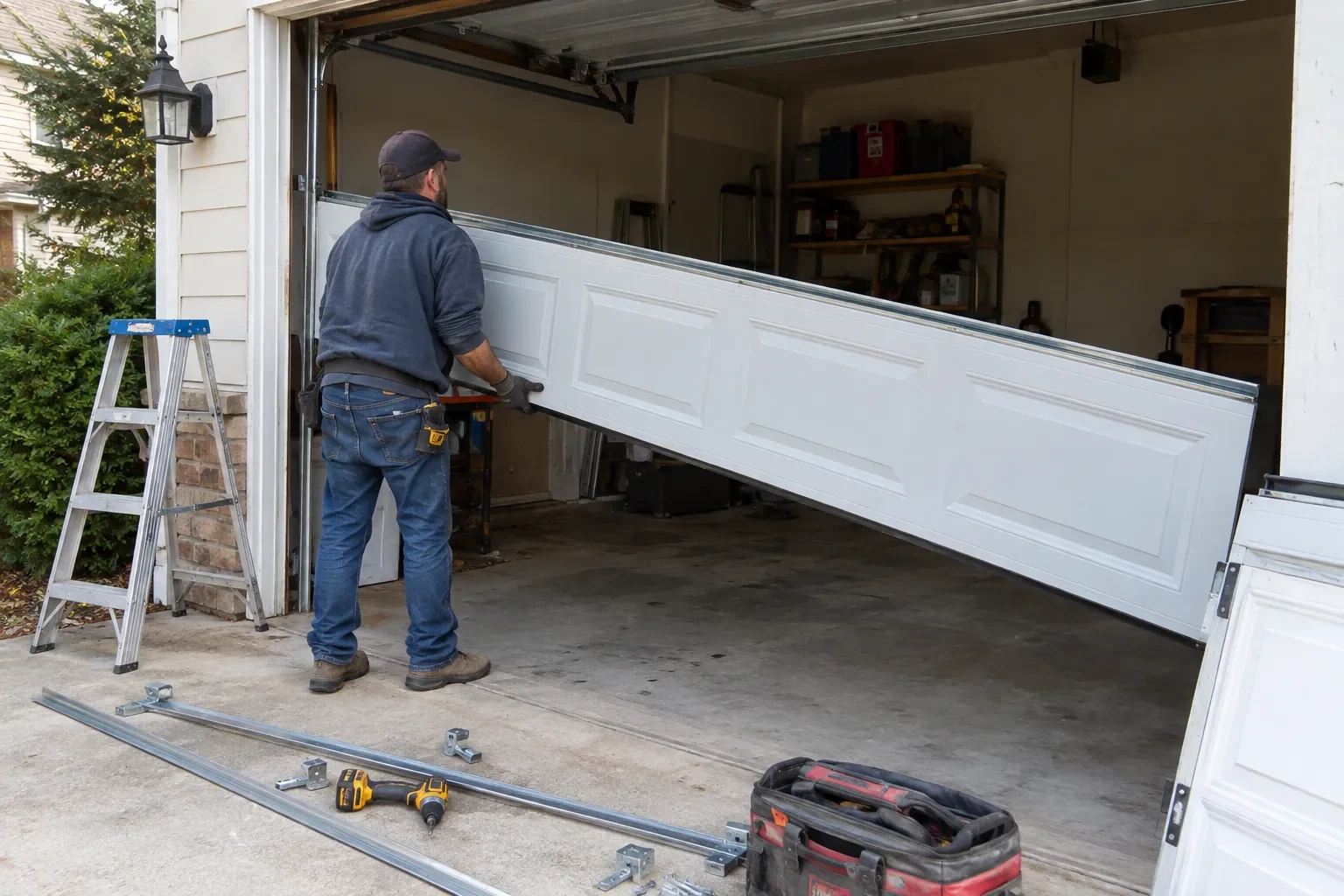
The technician first controls the door's weight and position with suitable supports or clamps. Stored spring energy is then managed with proper winding tools and a defined sequence before connected parts are loosened. Cables, drums and springs are matched to the door and lift geometry, installed with the system secured, and checked for level tension through controlled movement.
The operator is reviewed when panel damage changes door movement, balance or closed position. After the mechanical repair, the drive connection, limits and protective devices can be checked against the restored travel. This is especially useful after impact, because a bent section may have made the operator stop early or apply force against resistance before the damaged panel was replaced.
A reversal can start with a blocked or misaligned photoelectric sensor, a distorted sensing edge, resistance in the track, an incorrect close limit or a control-circuit issue. Inspection covers the clear opening, sensor alignment and wiring, bottom edge and mechanical travel. The source is corrected first, then the protective response is tested through several complete cycles.
NiagaraOntario
Commercial Sectional Door Repair · Thorold, Thorold Park, Thorold South, Allanburg, Port Robinson
Every square is one home in a hundred.
On-site assessment
A high-lift door begins smoothly, then a cable loses tension as the top sections change direction.
(365) 364-0203, open 24/7.
On-site assessment preferred · (365) 364-0203, open 24/7