Skip to content
ThoroldGarage Door Repair Co.Open 24/7 (365) 364-0203
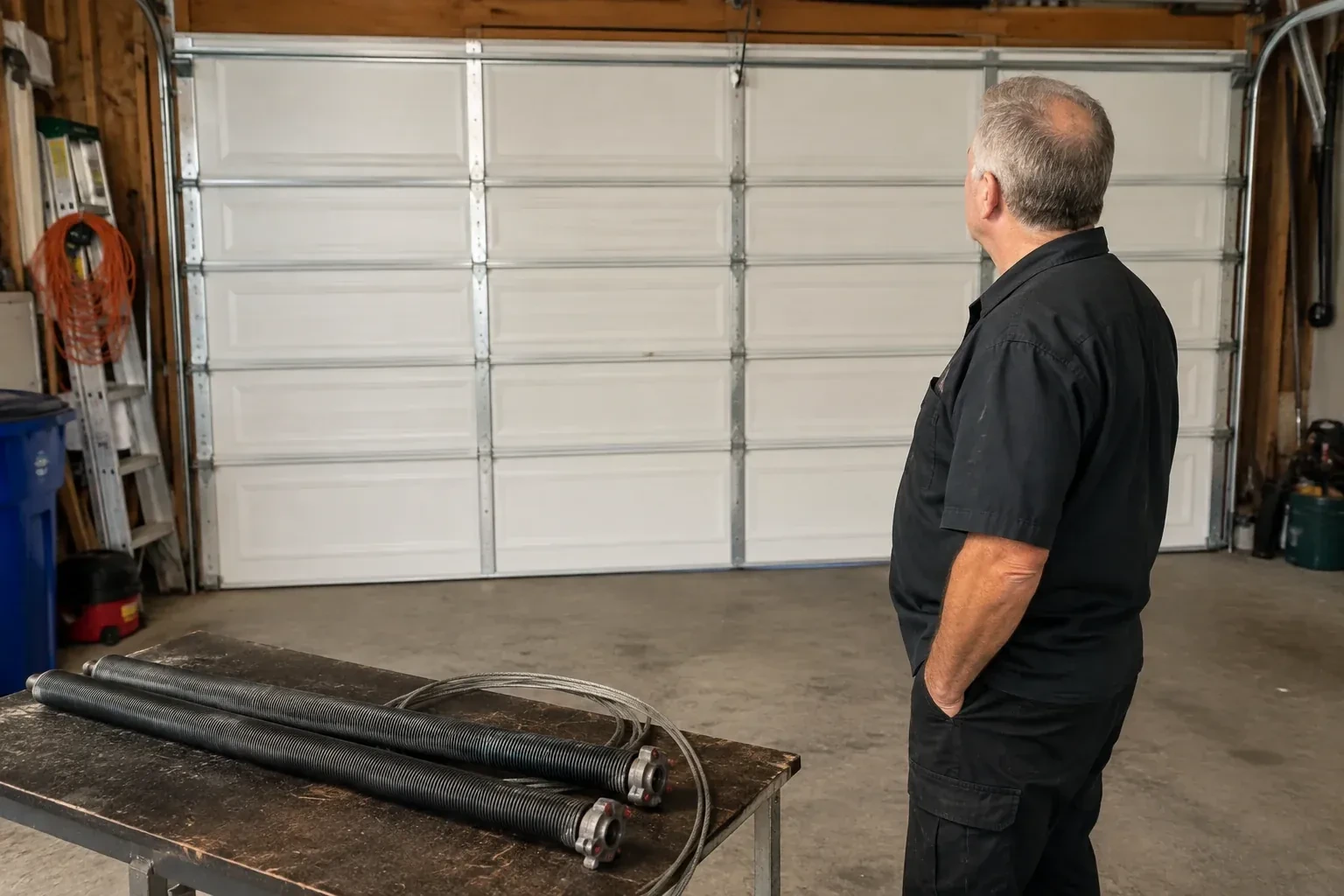
Detached coil springs with end fittings and a cable rest on a bench in front of a closed garage door. — Torsion Spring Replacement, Thorold South

Springs · Thorold South

Torsion Spring Replacement

After pulling the red release cord, you tried lifting the door yourself and it would barely leave the floor. A door that used to glide up with one hand now takes real effort, which points to the counterbalance rather than the opener.

In plain words

Every spring is built for a number of open-close cycles, and replacement is a natural moment to choose that number deliberately. A standard residential spring is commonly rated around ten thousand cycles; a family that opens the door six times a day uses those up in a few years. Higher-cycle springs use heavier wire and a longer coil to produce the same force with less stress on the steel, so they last proportionally longer. The technician can explain the trade-off and fit whichever option suits the household's use of the door, then wind and balance it accordingly.

Sound familiar?Thorold South

The call
The door drops the last stretch to the floor rather than settling, and when you stop it halfway by hand it slides down instead of staying put. Balance has drifted, and the spring is no longer holding its share of the weight.
NextHow the visit goes

Torsion Spring Replacement · Thorold South

How the visit goes

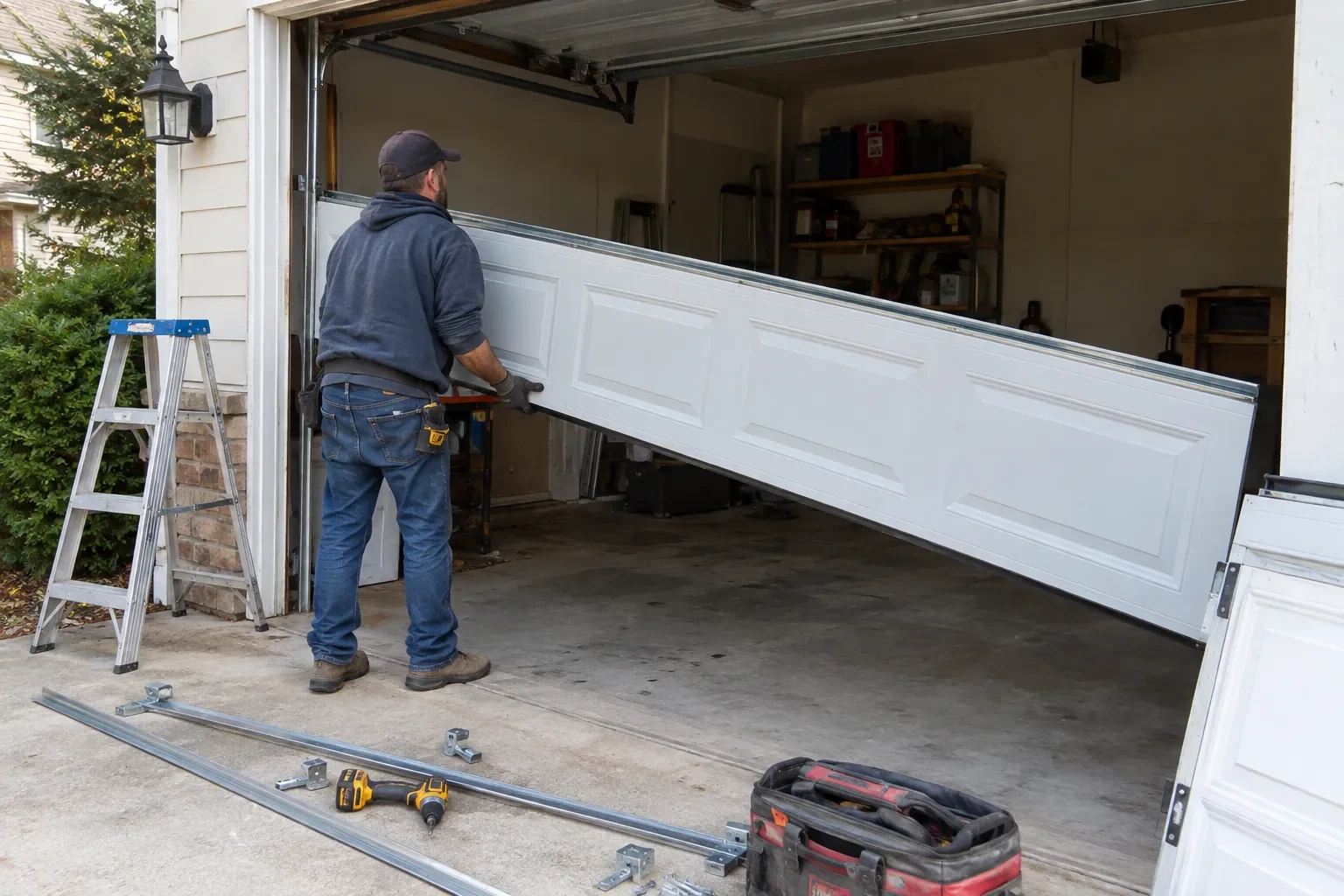
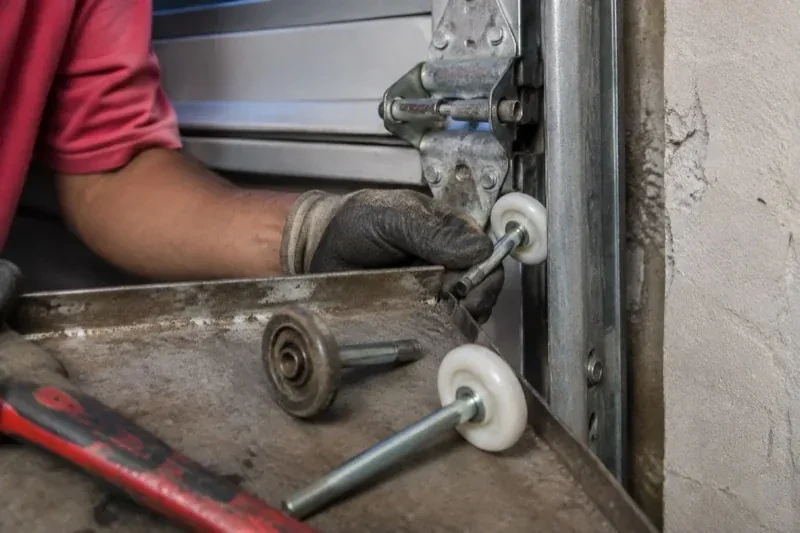
Illustrative garage doors scene — Thorold South
  1. Scene 1

    Reading the spring itself

    The first measurements come from the spring that is already on the shaft. The technician measures wire thickness across a run of ten or twenty coils, the inside diameter of the coil, the overall length of the spring when relaxed, and the wind direction, which is read from how the coils lean. On a two-spring door each spring is checked separately, because a left-wound and a right-wound spring sit on either side of the centre bracket. Any tag or colour marking is noted too. These numbers narrow down what the door was built with, and together with the door's weight they point to the correct replacement.

  2. Scene 2

    Finishing the job properly

    After the balance and opener tests pass, the technician lubricates the new spring coils, bearings, hinges and roller bearings with a garage-door lubricant, leaving the track clean so the rollers run true. The old spring and any replaced parts are removed from the site. The customer is shown how the door should feel by hand, where the manual release is and how to use it, and what was installed, including the spring specification for future reference. A final look confirms clamps are off, tools are clear of the tracks and the area beneath the shaft is tidy.

  3. Scene 3

    Your spring on record

    The technician leaves you with the specification of what was installed: wire size, inside diameter, length, wind direction and the cycle rating chosen, along with notes on any bearings or cables replaced. Keep that record with the door's paperwork or photograph it. It means future service starts from known numbers rather than fresh measurement, and if a door section or opener is ever changed, the installer can confirm the springs still suit the door's weight. Many technicians also mark the installation date on the spring or centre bracket so the age of the system is easy to read later.

In the van

  • Stationary cone bolts and nuts
  • Cable drums
  • Socket set and wrenches
  • End bearing plates
  • Wire gauge and tape measure

What shapes the quoteThorold Garage Door Repair Co.

Door size and weight
A double-width door, a solid wood door or a thick insulated door weighs far more than a single-width steel panel, calling for heavier wire, longer coils or more springs to balance it.
Anchoring to the header
A centre bracket with pulled lag bolts, a split header or a corroded bracket needs refastening, reinforcing or replacement before the spring can be wound, which is included when found.
One spring or two
A single-spring door needs one spring; a paired system is usually replaced as a matched set of left- and right-wound springs. The number of springs and whether both are replaced is the largest single influence on the scope.

FeesSame any hour

Have it ready

Before you call · 0 / 3

(365) 364-0203

Frequently asked questions

Will the new spring look the same as the old one?

Not necessarily, and that is fine. The paint colour on the winding cone or coil is a code that identifies wire size and wind direction, and different suppliers use their own schemes, so a matched replacement can carry a different colour than the spring it replaces. What matters is that the wire size, diameter, length and wind direction suit the door's weight and height, which is confirmed by the balance test.

How often should the springs be lubricated, and with what?

Once or twice a year is a good rhythm, with autumn the most useful time because cold thickens grease. Use a garage-door lubricant, typically a silicone or lithium spray, applied along the coils so it works between them as the door cycles. Hinges, roller bearings and the end bearings benefit from the same treatment. Keep the track itself dry, since lubricant there gathers grit and slows the rollers.

How long does a torsion spring replacement take?

Most residential replacements are completed in one visit. Securing the door, measuring, removing the old spring, fitting and winding the new one, balancing and testing the opener typically takes an hour or two, longer if bearings, cables or a bent top section are also being dealt with. The technician confirms the scope after the first checks, so you know what the visit involves before the work starts.

Thorold Southinformation

NiagaraOntario

Torsion Spring Replacement · Thorold, Beaver Dams, Thorold Park, Allanburg, Port Robinson

Town
Thorold South, Niagara
In business
24 years
Hours
Open 24/7
Nights, weekends and holidays, same fees
Visits
On-site assessment preferred. Request a visit or call.

2021 census: what it means at the door

Every square is one home in a hundred.

  • 55 in 100 homes · older homes
  • About 55% of homes in Thorold were built in 1980 or earlier, according to the 2021 Census.Original openers in older neighbourhoods often predate photo-eye sensors and rolling-code remotes. Bringing one up to date means a quieter motor, sensors that stop the door for a child or pet, and remotes that cannot be copied from the driveway, all installed in a single visit.
  • Single-detached houses make up about 69% of homes in Thorold (2021 Census).Detached houses commonly have attached two-car garages with a wide double door, which is a heavy door on a pair of torsion springs. Spring and cable work on these doors is done as a matched set so the door lifts level and the opener carries only its intended load.

Source: Statistics Canada, Census Profile

Open Thorold South in Google Maps

On-site assessment

Request a visit.

After pulling the red release cord, you tried lifting the door yourself and it would barely leave the floor.

(365) 364-0203, open 24/7.